SPARline Promotion

Built for promotion analysis and forecasting of consumer packaged goods.

Laptop displaying colorful business analytics dashboard graphs.

Promotion Analysis and Forecasting

Click here to run the SPARline system.

Key questions SPARline can answer:

  • Incremental volume and profit from promotions; how has it changed over time?
  • Contribution promotions make to volume and profit. Are there opportunities to increase revenue?
  • Optimal promotion mix—brand, size, market, key account.
  • Where can new promotions be tested with minimal risk?
  • What will next year’s promotional plan deliver in incremental volume and profit?
  • How much will the base consumer franchise grow or erode next year? Long-term strategies to build a brand franchise?
  • Impact of competitors’ trade promotions on your sales?
  • How much forward buying will occur? And its profit impact?
  • Business review tools to enhance negotiation with retailers.

Overview of the SPARline Framework
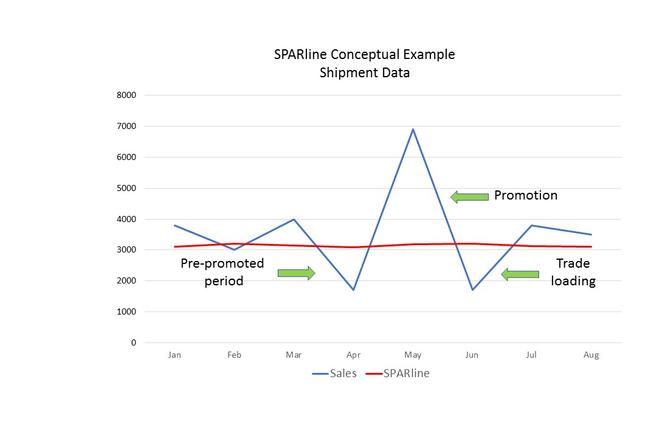
Line graph of shipment data trends.

Conceptual example of the SPARline

Various brand logos on a white background.

Some companies that have used SPAR InfoTech Software
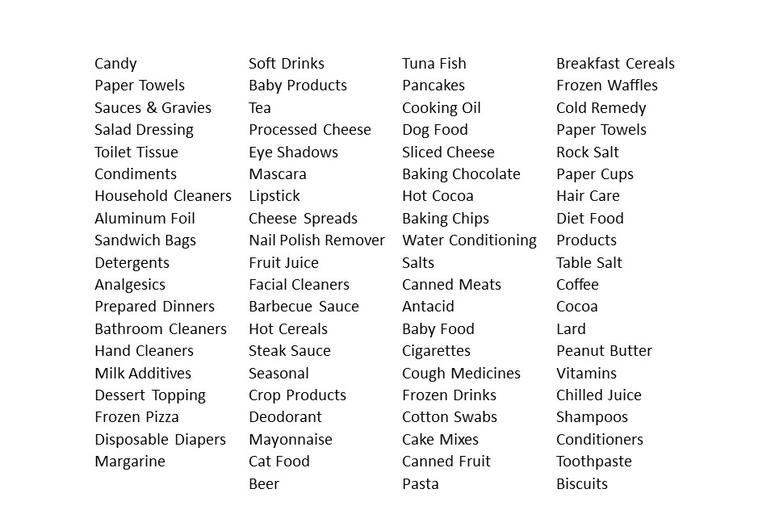
List of various grocery and household items.

Categories evaluated by SPARline​​

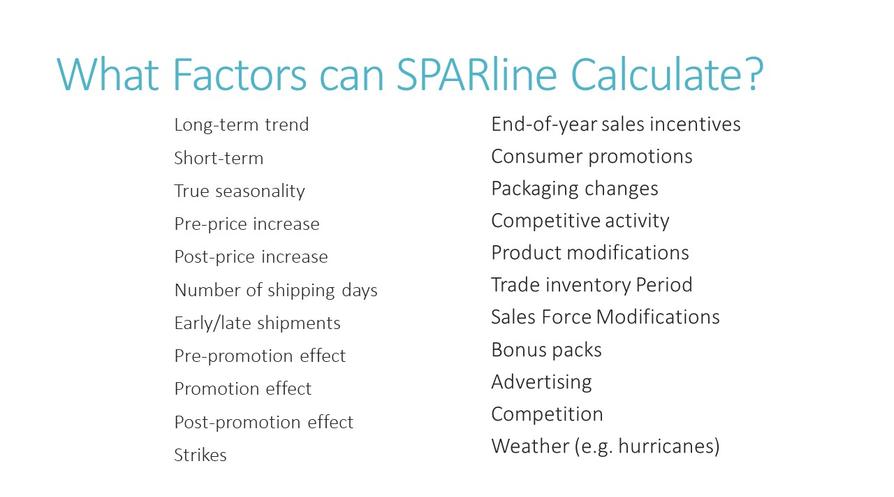
Factors SPARline can calculate, listed comprehensively.

​Market Conditions Considered in Calculating the SPARline

Case Studies

Impact of Shorter Promotions

Background: An 8-week promotion was typically run in the fall. One year, the promotion was started 3 weeks early in August.

Analysis: Total sales for the 8-week promotion were in line with prior years, but sales during the first three weeks were at the level of the SPARline. The total sales during the promotion were equal to prior years because sales in the last 5 weeks of the promotion were higher than the sales in the last weeks of prior promotions. Therefore, the discount given during the first three weeks didn’t generate any additional volume.

Recommendation: Shorten the promotion to 5 weeks.

Net Results: The 5-week promotion generated as many incremental sales and more profits than the 8-week promotion.

Learning: Shorter promotions are usually more profitable than longer promotions since the retailer typically only performs once during the promotion, and sales in the remaining weeks are just for normal turnover that doesn't require a promotional discount.

Impact of Retailer Profit Margins

Background: During promotions, this product generated significant incremental volume and profits. But between promotions, OOS increased, distribution dropped, and sales were generally low as the item was being treated as a specialty in-and-out product.

Analysis: Only during the promoted period were the retail margins high enough to be acceptable to the retailers.

Recommendation: Change the overall positioning of the product so that margins could be maintained during non-promoted periods and then promote at a level to allow both the retailer and consumer to benefit from incremental promotional monies.

Net Results: The product was repackaged with new pricing to allow the retailer to maintain margins during non-promoted periods.

Learning: Sometimes promotions appear to be very successful when measured against a normal level of sales. But if the normal level of sales is too low, then it may be that the problem is not with the promotions but with the low levels of sales between promotions. Raising the level of sales between promotions will make the promotions less successful, but overall can make the product line more profitable.

Promoting Different Sizes of the Same Brand at the Same Time

Background: Two different sizes of a brand were usually promoted at the same time on the theory that only promoting one size would result in cannibalization of the non-promoted item by consumers.

Analysis: It was found that retailers would only promote one of the sizes at retail and pocket the discount on the non-promoted size.

Recommendation: Stagger the promotions of the two sizes so that only one size at a time is on promotion.

Net Results: Overall revenue and profits from promotions increased while promotion costs remained flat.

Learning: If promoting different packages of the same brand, it is necessary to confirm that retailers are discounting both sizes to the consumer.

Promoting Multi-Brand Package

Background: A special package had a number of different brands that were sold as a single item. An example would be when multiple brands are packaged together to allow the consumer to use all the brands to make a meal. The individual items were also sold separately. The individual brands were all promoted, but the package with multiple brands was not promoted since it was believed promoting the package would encourage buyers to break up the package to sell the individual items separately at full price.

Analysis: It was found that different classes of trade purchased the combo package, and other classes of trade purchased the individual brands.

Recommendation: Promote the special package at a high discount since it focused on a class of trade that did not react to promotions on the individual brands.

Net Results: Promotions on the special package were successful and didn’t have any cannibalization or negative impact on the individual brands.

Learnings: It is risky to accept opinion, myths, or common sense without quantifying the impact of the decisions that occur from these beliefs.

Impact of Trade Classes

Background: A national health and beauty aids product had a mix of successful and unsuccessful promotions. Over time, it was determined which promotions generated the best results and which the worst, and the better ones were repeated, which appeared logical.

Analysis: One trade class accounting for only 20% of the overall volume bought most of the incremental volume during certain types of promotions.

Recommendation: The promotion program should be redesigned so that certain promotions could be offered to one trade class and other types of promotions offered to the other classes of trade.

Net Results: Promotion profitability was greatly increased since the promotional monies spent outside the one class of trade were no longer wasted, and the specific trade class promotions yielded greater sales and profits.

Learning: Just looking at aggregate totals often hides critical information. This applies to market-level promotions, where certain retailers in the market drive the promotion's success, and national promotions, where certain markets or classes of trade drive the promotion's success.

Low-Noise Promotional Periods

Background: One size (with five national brands) sold primarily in grocery stores usually had poor results from promotions but occasionally had a very successful promotion.

Analysis: The successful promotions always occurred during periods of low noise. During certain times of the year, the sales department was not distracted, trying to focus on larger volume items, and could focus on selling this size product.

Recommendations: Promote less often when other larger volume sizes are on promotion and focus the promotions on periods when other larger volume sizes are not distracting the sales force (and the retailers).

Net results: The unprofitable promotions were eliminated, and more focus was put on promoting this size product during off periods, resulting in even greater profits from the promotions.

Learnings: Many factors impact the profitability of promotions, and many of these factors are within the control of and known by the CPG Company. Expanding the analysis beyond just what incremental sales and profits are generated but also the impact of internally driven factors on the promotions to improve the whole promotion planning process.

Impact from Promoting Other Products of the Same Manufacturer

Background: A Company promoted 3 or 4 different brands at once to jobbers for vending machine sales. The largest brand usually had very successful promotions, but on occasion, for no apparent reason, the promotion was a failure and lost money.

Analysis: It was found that the promotion lost money when certain other brands were also promoted. Based on discussions with the jobbers, it was found that the smaller brands had a higher gross margin when on promotion, and since the vending slots were limited, the smaller brands were put into the vending machines instead of the major brands.

Recommendation: Promote brands with various promotional discounts so that the jobbers do not have an incentive to put the smaller brands into the vending machine. It should be noted that this policy by the jobbers was self-defeating since the major brand sold far more product from the vending machines than the secondary brand. But since the jobbers operated on gross margin in the vending machines, they still stocked the vending machines with the secondary brands. Long term, there needed to be a change in the way the promotions were designed and sold to the jobbers since promoting the major brand, even at a lower gross margin, generated more profit due to higher volume.

Net Results: The major brand was promoted alone or with limited secondary brands, and the unsuccessful promotions were eliminated. Long term, the education process worked, and the jobbers, over time, came to realize that selling more product at lower gross margins increases overall profits.

Learning: To just quantify the impact of promotions on profits and sales is not enough. The incremental sales/profits need to be analyzed against other factors to see what is causing the difference in the incremental sales/profits.

The Conflict: Brand Management and Sales

Background: The sales department was constantly pressuring brand management to promote more often and at higher discount levels.

Analysis: Brand Management did not have credible data to support not promoting more or at higher discount levels, so both Brand Management and the Sales Department felt the other department was being unreasonable, and this caused a breakdown in the working relationship.

Recommendation: Have incremental sales and profits from each promotion calculated by the research department, which presented their results to both groups. This not only gave everyone a common set of results to work with but also allowed both sides to suggest modifications to the analysis to ensure that the numbers were acceptable to both departments.

Net Result: Sales understood that some promotions were unprofitable and shouldn’t be run. Brand Management realized that some promotions were profitable and could be run more regularly. Both Brand and Sales were also able to see if raising or lowering promotion amounts paid during a promotion had a positive or negative impact on sales and profits, and were able to adjust the discount levels. In cases where promotions could generate more sales volume but lose money, the two departments worked cooperatively based on their mutual objectives to find solutions to meet the overall sales volume and profit goals.

Learnings: If hard numbers don’t exist that have credibility, the conversation changes from a results- and solution-driven focus to one of politics and conflict. Quantified results from the promotions would take away the subjectivity of the discussion and allow everyone to cooperatively work together based on hard data.

FAQ's

1. Why is there such a long gap from when the SPARLINE was sold to today?

Answer: 30 years ago I bought a small merchandising company and decided to focus on building an International Merchandising Company. Today it is over $200,000,000, listed on NASDAQ and operates in countries including Mexico, Brazil, China, India and Japan that cover over 50% of the worlds population. I stopped selling SPARline and supporting the SPARline system at that time. Recently I have done research into the state of Trade Promotion Analysis and Effectiveness and have found that it has actually decreased from where it was 30 years ago. Today it is common for a large Packaged Goods Manufacturer to spend a Billion dollars or more on trade spending in a year with anywhere from 33% to 50% being wasted. I also found out that while the reporting and database activities of supporting promotions have improved over the years the accuracy of the calculation of incremental sales and profits from promotions is no better than is was 30 years ago. I have now spent two years updating the SPARline system and adding many AI algorithms so that in addition to continuing to produce the most accurate estimate of incremental sales and profits it also deals with a number of issues that could not be dealt with in the past due to processing and communication limitations. I have also put everything up on the web site so that anyone can try to use the system for free.

2. Why is SPARLINE better or different?

3. How does the model work that allows you to support the claim this is the best answer?

4. I don’t know enough about Mathematics or AI to judge if what is written is accurate or not. How can I have confidence it works other than studying the mathematics?

5. Maybe the math worked 30 years ago but a lot has changed in 30 years. Why do you think it will still work?

6. I have a system now to evaluate Promotions. Why should I switch?

7. I have a baseline or SPARLINE now. Will the SPARLINE give me a different answer than I am currently getting?

8. How can I check if I will get a different answer?

9. If I have any questions can I contact someone?

10. What is the background of Robert G Brown and what other systems has he built?

11. If I use the SPARLINE what is the bottom line impact?